Top 10 Aircraft Fuel Injection System Manufacturers for Buyers

Choosing a fuel injection system in aircraft is not a simple brand comparison. It is a decision about engine compatibility, operating conditions, support, and long-term serviceability. A system must meter fuel consistently as power settings and airflow change. Small details matter: the clarity of installation documents, access to replacement parts, and the quality of troubleshooting support can shape daily operation.

A useful perspective comes from Mike Busch, an A&P/IA and aviation maintenance author. His published maintenance guidance can be paraphrased for buyers this way: “Understand the engine’s condition and history before judging its hardware.” That is a paraphrase, not a verbatim quotation. It points to a practical truth: even a well-engineered injection system cannot compensate for incomplete records or poor maintenance practices. Buyers should verify applicable engine models, service documentation, warranty terms, and support arrangements directly with manufacturers.

This Top 10 guide compares aircraft fuel injection system manufacturers through those buyer-focused questions. It considers product scope, technical resources, parts availability, and the fit between each supplier’s offerings and an operator’s needs. Some specifications look reassuring on a product page, but real-world support may be less visible. Ask direct questions. Check the details. No ranking can replace an installation review by qualified aviation professionals or careful confirmation against current manufacturer documentation. The aim is not to crown one universal winner. It is to help buyers make a better-informed shortlist—and to leave room for questions that a polished brochure may not answer.
Top 10 Aircraft Fuel Injection System Manufacturers for Buyers

Aircraft Fuel Injection Systems: Purpose, Operation, and Main Types

Aircraft fuel injection meters fuel and sends it to an engine’s intake ports or cylinders. The aim is a dependable air-fuel mixture across changing power settings and operating conditions. Compared with a carburetor, injection can improve fuel distribution between cylinders. It does not eliminate every icing or starting issue.

In a common continuous-flow system, a metering unit responds to airflow and fuel pressure, then sends fuel through lines to individual nozzles. The spray enters near each cylinder’s intake port. Some designs use timed delivery, while electronically controlled systems adjust fuel using sensor data. These categories can overlap; naming varies by engine design.

Small details matter. A blocked nozzle or uneven flow can produce rough running and uneven cylinder temperatures. Pilots may notice different starting behavior when the engine is hot or cold, though procedures depend on the aircraft and engine. Direct cylinder injection is another arrangement, but it is less common in piston aircraft. Fuel injection is not automatically simpler to maintain. Qualified technicians rely on the approved manual, careful inspection, and engine-specific limits. Real systems can be less tidy than diagrams suggest.

Key Components and Certification Standards

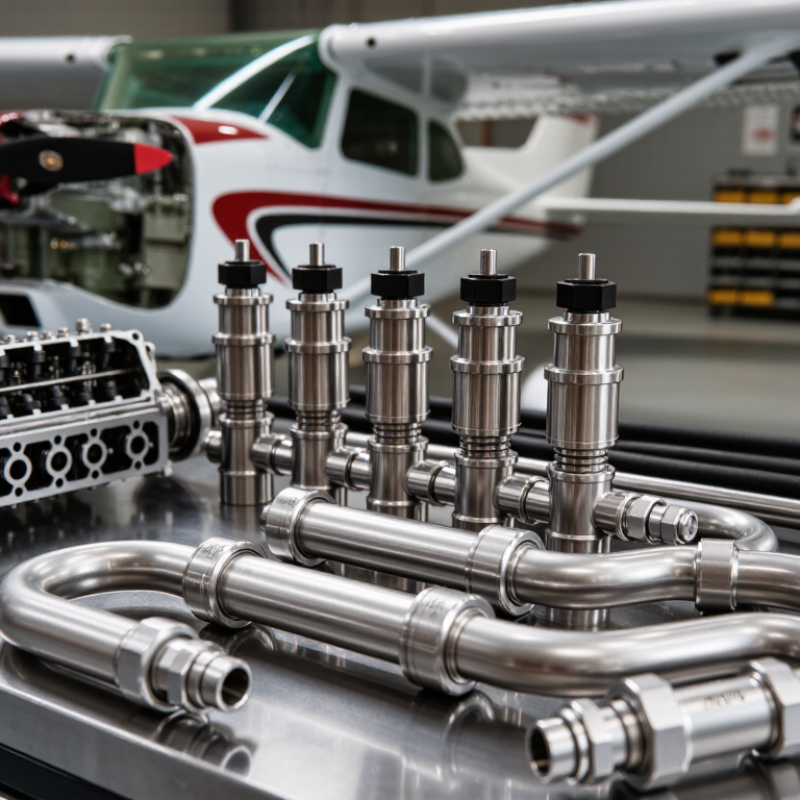
Aircraft fuel injection systems depend on matched components, not just a well-made injector. Core parts include fuel pumps, metering units, injectors, filters, regulators, and connecting lines. Their materials must tolerate fuel exposure, pressure, heat, and vibration. A nozzle’s spray pattern and flow rate matter because uneven delivery can affect engine performance. Small details matter.

Buyers should request component specifications, material traceability, inspection records, and evidence of flow or pressure testing. Check that replacement parts match the aircraft’s approved configuration; a similar-looking fitting may have different limits. Certification requirements depend on the aircraft and installation. Relevant evidence may include approved design data, production conformity records, and airworthiness documentation under applicable aviation authority rules. Environmental qualification standards may apply to electronic equipment, while software assurance requirements may apply to programmable controls. Neither applies automatically to every part. Paperwork can mislead when it is incomplete or disconnected from the exact part number. Cross-check certificates, revision status, and maintenance instructions with qualified technical personnel. No checklist catches everything, so buyers should also ask how suppliers handle nonconforming parts and field feedback.

Criteria for Evaluating Aircraft Fuel Injection Manufacturers

A buyer should judge an aircraft fuel injection manufacturer by traceable engineering evidence, not polished brochures. Check whether the system is approved for the intended engine and aircraft configuration, then review installation limits, calibration procedures, and documented operating conditions. FAA certification records and applicable technical documents help verify this fit. Ask for test data covering fuel flow, pressure stability, temperature range, and response during throttle changes. Small differences matter. A rough idle on a cold morning can reveal more than a clean specification sheet.

Durability and support deserve equal scrutiny. The FAA’s 2021 General Aviation and Part 135 Activity Survey recorded about 25.5 million flight hours, underscoring the demanding operating environment for installed components. Ask manufacturers for evidence from endurance testing and field-service tracking, including how failures are investigated and corrective actions documented. The ICAO Environmental Report 2022 notes that aviation produces roughly 2% of global human-caused CO2 emissions; accurate fuel metering can support efficient operation, though it cannot guarantee lower emissions by itself. Compare spare-part availability, repair turnaround, technical support, and revision control. Request sample maintenance instructions. Read them closely. Some documents look complete but leave practical questions unanswered, and that deserves a second review.

Top 10 Aircraft Fuel Injection System Manufacturers: Buyer Evaluation Criteria

Suggested allocation of evaluation effort, not an industry benchmark or a ranking of manufacturers. Confirm applicable airworthiness approvals, aircraft compatibility, and support capability for the specific aircraft and jurisdiction.

Profiles of Ten Aircraft Fuel Injection System Manufacturers

The ten manufacturer profiles are best compared by engineering scope, not by catalog size. They span piston-engine servo specialists, turbine hydromechanical-control makers, electronic-metering developers, nozzle-and-manifold producers, fuel-pump builders, pressure-regulator suppliers, sensor integrators, OEM production houses, repair providers, and precision machinists. Each serves a different point in the fuel path. Fit matters.

For buyers, useful evidence includes documented flow testing, material traceability, environmental qualification, and access to replacement parts. Ask how a supplier handles contamination, vibration, temperature swings, and calibration drift; these details matter more than polished product claims. GAMA’s 2024 General Aviation Aircraft Shipment and Billing Report recorded 3,162 airplane shipments and $31.9 billion in billings. Those figures describe the wider aircraft market, not fuel-injection demand, but they show why production capacity and delivery planning deserve scrutiny. A smaller supplier may offer close technical support, yet limited test capacity can become a bottleneck. Compare each profile’s installation experience, quality records, repair turnaround, and ability to support legacy configurations. A report is not a substitute for qualification.

Buyer Considerations for Procurement and After-Sales Support

When comparing aircraft fuel injection system manufacturers, buyers should look beyond unit price. Confirm that the offered assembly matches the engine configuration, approved documentation, and operating environment. A part number that looks close may still differ in fittings, flow settings, or installation requirements. Ask for current technical data and traceable quality records before placing an order.

After-sales support matters most when an aircraft is waiting on a component. Ask how the supplier handles troubleshooting, warranty claims, and repair turnaround. Check whether service staff can review photographs, serial numbers, and maintenance findings promptly. Also confirm the availability of seals, nozzles, and other replacement parts. Small items can cause long delays. Get response times in writing, where possible.

Procurement teams should compare lead-time estimates against actual stock status, not a vague delivery promise. Clarify packaging, inspection requirements, and what happens if an item arrives damaged or does not fit. A clear return process helps. It is tempting to choose the lowest bid, but support quality is harder to measure than price. I would still ask for references from operators with similar aircraft, then verify the details. No supplier is perfect; the useful question is how clearly they address problems.

Top 10 Aircraft Fuel Injection System Manufacturers for Buyers - Buyer Considerations for Procurement and After-Sales Support

An anonymized buyer-comparison framework. Supplier-specific capabilities, approvals, lead times, and support terms should be verified directly for the applicable engine, aircraft, part number, and operating jurisdiction.

No. Manufacturer Evaluation Area What Buyers Should Verify Procurement Evidence to Request After-Sales Consideration
1 Engine and aircraft applicability Confirm that the offered injector, nozzle, manifold, pump, or metering component is approved or otherwise eligible for the exact engine and aircraft configuration. Applicable part numbers, engine-model coverage, installation limitations, and traceable eligibility documentation. Ask how configuration changes, superseded part numbers, and service bulletins are communicated.
2 Regulatory approval and release documents Check which production, design, or maintenance approvals apply to the specific part and transaction. Approval pathways vary by part, aircraft, and jurisdiction. Relevant approval references and the required release or conformity documents, such as an FAA Form 8130-3 or an EASA Form 1 where applicable. Confirm the supplier can support documentation corrections and records requests throughout the part’s service life.
3 Quality management and traceability Review the quality system, inspection controls, lot or serial-number traceability, and controls over outsourced processes. A quality-system certificate alone does not establish part approval. Current quality certificates, sample inspection records, traceability procedures, and nonconformance-control process. Establish how quality escapes, corrective actions, and potential safety issues are reported and investigated.
4 Materials and fuel compatibility Confirm material specifications, operating limits, and approved fuel compatibility for the intended installation; do not assume compatibility across different fuel types or system designs. Applicable technical specifications, material or process records where required, and installation or operating limitations. Request guidance for storage, preservation, handling, and maintenance intervals specified by the applicable instructions.
5 Testing and acceptance criteria Understand which inspections and functional tests are required for the component, and ensure acceptance criteria match approved technical data. Test or inspection reports, calibration status for relevant equipment, and defined acceptance/rejection criteria. Clarify whether troubleshooting, repeat testing, and failure analysis are available after delivery.
6 Capacity, availability, and lead time Compare quoted lead times and available inventory for the requested part number. Availability can differ between new production, exchange, and repair options. Written delivery schedule, stock status, minimum order quantities, and any supply constraints or dependencies. Ask about urgent-order handling, repair turnaround estimates, and support for recurring demand planning.
7 Repair, overhaul, and exchange options Determine whether the supplier offers approved repair or overhaul services for the specific component and what conditions make a unit eligible. Scope of work, eligibility criteria, quotation assumptions, repair release documentation, and exchange-core requirements, if offered. Review turnaround commitments, warranty coverage, return procedures, and handling of units found beyond economical repair.
8 Warranty and returns Compare warranty duration, start date, covered defects, exclusions, and any installation or maintenance conditions. Written warranty terms, return authorization process, required supporting records, and claim-response expectations. Check who pays shipping and evaluation costs, and how replacement or repair decisions are handled.
9 Technical support and documentation access Verify support channels, response process, and whether the supplier can provide authorized installation, maintenance, and troubleshooting information. Support contact details, documentation list, escalation path, and any training or service-network information. Confirm support availability across the buyer’s operating regions and time zones.
10 Total cost and supply risk Compare the full procurement cost, including testing, shipping, duties, exchange cores, and expected maintenance—not just the quoted unit price. Itemized quotation, payment terms, delivery terms, price validity, and any applicable export or import requirements. Assess continuity plans, end-of-production notices, alternate eligible sources, and long-term parts-support commitments.

Procurement note: Validate each supplier’s claims against the current applicable regulatory records, approved technical data, and contract documents before purchase or installation.