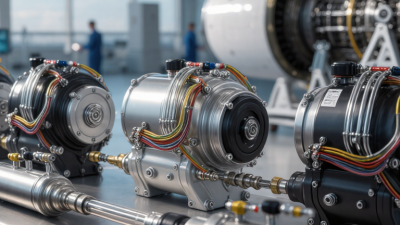
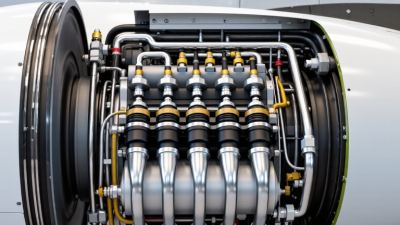
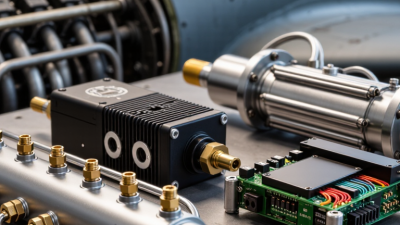
China has become an important sourcing region for aviation fuel injection components and related engine systems. Manufacturers serve commercial, general aviation, agricultural, and specialized aerospace markets. However, quality can vary widely between suppliers.
A reliable evaluation should examine engineering capability, production controls, and documented aviation experience. Look for manufacturers with traceable materials, calibrated test equipment, and experienced application engineers. Their facilities should support precision machining, cleanliness control, pressure testing, and dimensional inspection. These details matter when a small injector fault can affect engine efficiency, starting performance, or operational safety.
Certification evidence deserves careful attention. Buyers should review quality-management records, product test reports, inspection procedures, and relevant customer references. ISO 9001 may show process discipline, but it does not automatically prove complete aviation suitability. That distinction is often overlooked. Suppliers should also explain how they manage design changes, batch identification, nonconforming parts, and after-sales support.
This guide introduces leading Chinese manufacturers associated with fuel injection aviation applications. It does not treat company size as proof of technical excellence. Instead, it considers product scope, manufacturing depth, verification practices, communication, and export experience. Some suppliers may present impressive equipment but provide limited application data. Others may be smaller and more responsive, yet less experienced with international airworthiness expectations. Buyers should verify every claim independently.
The best choice depends on engine type, fuel specification, operating environment, certification needs, and expected production volume. Request samples when practical. Compare test results under equivalent conditions. A careful shortlist reduces technical and commercial surprises. Even this approach has limits, because public information may be incomplete or outdated.

China’s aviation fuel injection market covers several technical paths. Small piston aircraft commonly use carburetion, port fuel injection, or electronic fuel injection. Port systems place injectors near the intake valves. Electronic control adjusts fuel delivery using pressure, temperature, and engine-speed data.
Turbine aircraft use different hardware. Their systems include hydromechanical fuel metering, electronically controlled metering, simplex nozzles, duplex nozzles, and airblast injectors. Airblast designs mix fuel with compressor air before combustion. This improves atomization, especially during high-altitude operation. Duplex nozzles support stable combustion across idle and takeoff conditions. Small details matter.
The Civil Aviation Administration of China reported 6.19 million tonnes of civil aviation fuel consumption in 2023. That figure highlights the value of accurate metering, although it does not separate injector types. The ICAO Environmental Report 2022 links better combustion control with lower fuel burn and reduced local emissions. IATA’s 2024 industry outlook estimated sustainable aviation fuel production at about 1.9 billion litres in 2024, still below 1% of global jet fuel use. Future injectors must therefore tolerate changing fuel properties. Public Chinese data rarely identifies supplier-level technology shares. Any market ranking should be treated carefully. In practice, manufacturers are judged by spray uniformity, pressure stability, response time, altitude performance, and maintenance records. Testing remains essential.
China’s aviation fuel injection manufacturing is concentrated around established aerospace and precision-engineering clusters. The Yangtze River Delta, including Shanghai, Jiangsu, and Zhejiang, offers strong machining, materials, instrumentation, and supplier networks. These advantages support tight-tolerance injector parts and repeated quality checks.
The Bohai Rim, with Beijing, Tianjin, and nearby industrial areas, benefits from research institutes, testing capacity, and aerospace engineering talent. Shaanxi and Sichuan also matter because of their long aviation histories and specialized engine-production capabilities. Guangdong contributes advanced metalworking, electronics, and export logistics. In practical supplier audits, regional strength is useful, but it does not guarantee consistent performance. Factory discipline still matters more.
Tips: Check process records, not only certificates. Ask how suppliers control heat treatment, cleanliness, and dimensional variation. Review inspection equipment and calibration dates. Request traceability from raw material to finished component. A serious manufacturer should explain failure handling clearly. Visit the production floor when possible. Clean benches, controlled storage, and documented testing reveal more than polished presentations. Regional labels can mislead. Supplier depth, engineering communication, and stable quality deserve closer attention.
China’s leading aviation fuel injection manufacturers are gaining attention through precision engineering and disciplined production. Their systems support controlled fuel delivery across demanding flight conditions. Typical products include injection pumps, metering units, nozzles, and electronically managed assemblies. Each component must maintain stable flow under vibration, pressure changes, and temperature shifts.
Experienced manufacturers usually combine CNC machining, clean assembly areas, and documented calibration procedures. Production teams inspect nozzle geometry with optical equipment. They also test pressure response, leakage, spray patterns, and endurance performance. Traceable material records strengthen reliability. So does independent verification. Some suppliers provide technical drawings, inspection reports, and batch-level records for professional buyers.
The strongest manufacturers do not rely on low prices alone. They discuss service intervals, replacement parts, installation tolerances, and field feedback. Export experience can also reveal practical competence, especially when documentation crosses languages and regulatory systems. Still, factory claims need careful review. A polished catalog cannot replace witnessed testing or verified references. This is where buyers may need patience. A supplier should explain limitations, not hide them. Product development also remains imperfect; older injection designs may require updated control strategies or improved sealing materials. Careful evaluation should match the injection system with the engine, operating environment, maintenance capability, and applicable aviation standards.
China Top Aviation Fuel Injection Manufacturers?
China’s leading aviation fuel-injection manufacturers compete through engineering depth, not catalogue size. Their core work covers swirl atomizers, pressure-swirl nozzles, electronic metering, and high-temperature fuel manifolds. A production-ready injector must control droplet size across altitude, vibration, and rapid throttle changes. Engineers often combine computational fluid dynamics with laser particle analysis. Test benches then measure spray angle, flow deviation, leakage, and thermal durability.
IATA’s 2024 industry outlook estimates jet fuel at about 31% of airline operating costs. Small gains matter. ICAO’s Environmental Report 2022 also maintains a long-term target of 2% annual fuel-efficiency improvement. These pressures favor manufacturers with precision grinding, additive repair, automated inspection, and complete batch traceability. Typical evidence includes calibrated flow rigs, X-ray inspection, metallurgical analysis, and AS9100-based quality controls. Capability must be repeatable.
Production scale remains harder to judge. A factory may report impressive monthly output, yet complex injectors need stable process capability, not simple assembly speed. Buyers should examine first-pass yield, nonconformance records, calibration intervals, and hot-test correlation with engine data. Chinese suppliers are improving rapidly, but public technical disclosure is still uneven. That limitation deserves attention. Without independent endurance results, claims about efficiency should remain provisional.
Industry capability reference for aviation fuel-injection component manufacturing in China; company and brand names are intentionally excluded.
| Capability Dimension | Typical Aviation Applications | Core Technologies and Production Capabilities | Common Verification Methods and Standards |
|---|---|---|---|
| Fuel-Injection Product Scope | Fuel nozzles Fuel manifolds Metering units Fuel pumps | Capability is normally evaluated by the ability to manufacture, assemble, calibrate, and test precision fuel-system components for turbine engines, auxiliary power units, and aerospace ground-test systems. | Approved drawings, configuration-control records, qualification reports, first-article inspection documents, and traceable production records. |
| Precision Machining | Small orifices, metering sleeves, valve bodies, injector tips, and matched flow passages. | Multi-axis CNC turning and milling, precision grinding, electrical-discharge machining, lapping, deburring, and controlled surface finishing are commonly used for tight-tolerance fuel-metering parts. | Coordinate-measuring-machine reports, optical measurement, surface-roughness inspection, dimensional capability studies, and calibrated gauge records. |
| Additive and Advanced Manufacturing | Complex internal passages, lightweight manifolds, and prototype or low-volume injector geometries. | Metal additive manufacturing may be used for selected geometries, followed by heat treatment, support removal, internal-passage cleaning, machining, inspection, and process qualification. | Powder traceability, build-parameter records, density inspection, metallography, computed tomography, and post-processing validation. |
| Materials Engineering | High-temperature and corrosion-resistant components exposed to aviation fuel, vibration, and thermal cycling. | Common material families include nickel-based superalloys, stainless steels, precipitation-hardening steels, titanium alloys, and engineering coatings selected according to temperature, pressure, wear, and fuel compatibility requirements. | Mill certificates, chemical-composition analysis, hardness testing, tensile testing, metallographic examination, and material-lot traceability. |
| Thermal and Surface Treatment | Wear-critical valve components, injector tips, springs, shafts, and high-temperature assemblies. | Controlled heat treatment, solution treatment, aging, carburizing or nitriding where applicable, passivation, shot peening, and approved protective coatings may be integrated into the process route. | Furnace uniformity surveys, hardness profiles, coating-thickness measurement, residual-stress testing, and process-batch records. |
| Flow Calibration | Main fuel nozzles, metering valves, flow dividers, manifolds, and fuel-control assemblies. | Calibrated test benches measure mass-flow or volumetric-flow characteristics across specified pressure, temperature, and operating-point conditions. Component matching can be performed when required by the design. | Calibration certificates traceable to national or international measurement standards, repeatability studies, flow maps, and acceptance-test records. |
| Pressure and Leakage Testing | Pressurized fuel passages, valves, manifolds, pumps, and assembled injection units. | Hydrostatic or pneumatic pressure testing, proof testing, functional cycling, and leak testing are selected according to component design and applicable airworthiness requirements. | Pressure-test curves, leak-rate records, calibrated transducer data, test-fixture validation, and nonconformance-control documentation. |
| Spray and Atomization Testing | Pressure-swirl, airblast, simplex, duplex, and other turbine-engine fuel-nozzle configurations. | Test programs may evaluate spray pattern, droplet distribution, cone angle, circumferential uniformity, atomization quality, and performance over representative pressure and air-flow conditions. | Laser or optical measurement, high-speed imaging, spray-pattern inspection, test-cell instrumentation records, and design-correlation reports. |
| Environmental Qualification | Components exposed to vibration, temperature variation, humidity, altitude, fuel chemistry, and repeated start-stop cycles. | Qualification planning may include thermal cycling, vibration, endurance, fuel-compatibility, contamination-tolerance, and simulated operating-environment tests. | Qualification test plans, environmental test reports, failure-analysis records, and corrective-action documentation. |
| Non-Destructive Testing | Critical forgings, machined bodies, weldments, additive parts, and finished assemblies. | Depending on material and geometry, inspection may include fluorescent penetrant, magnetic-particle, ultrasonic, radiographic, eddy-current, and computed-tomography examination. | Qualified personnel records, approved inspection procedures, indication maps, equipment calibration, and inspection acceptance criteria. |
| Cleanliness Control | Metering passages, injector orifices, valves, pumps, and fuel-system assemblies. | Controlled washing, ultrasonic cleaning, filtered flushing, particle monitoring, capped handling, and contamination-prevention procedures are essential for small fuel passages and precision valves. | Particle-count results, rinse-fluid analysis, cleanliness certificates, controlled-area procedures, and packaging inspection. |
| Assembly and Configuration Control | Matched injector sets, fuel-control modules, calibrated valves, and replaceable line-replaceable units. | Controlled assembly instructions, torque management, serialized parts, calibrated tooling, software or parameter control where applicable, and documented configuration baselines support repeatable production. | Travelers, electronic production records, serialization logs, torque data, bill-of-material control, and change-management approvals. |
| Quality Management | Aerospace production, repair, overhaul, and special-process supply chains. | Mature suppliers generally operate formal aerospace quality systems covering risk management, supplier control, nonconforming-product control, corrective action, calibration, and full product traceability. | AS9100-series certification where applicable, ISO 9001, customer audits, internal-audit records, process-FMEA documentation, and corrective-action reports. |
| Special-Process Control | Heat treatment, chemical processing, coating, welding, brazing, shot peening, and NDT. | Special processes require validated procedures, qualified operators, controlled parameters, equipment maintenance, batch records, and subcontractor oversight because final quality cannot always be verified only by inspection. | Process approvals, operator qualifications, pyrometry records, chemistry analysis, periodic requalification, and customer or Nadcap accreditation where contractually required. |
| Production Scale and Flexibility | Prototype development, low-rate initial production, spare parts, and serial aerospace programs. | Manufacturing maturity is reflected in the ability to transition from engineering samples to repeatable low-rate or serial production while maintaining process capability, traceability, and delivery control. | Capacity plans, takt-time analysis, production-yield data, on-time-delivery records, bottleneck studies, and approved production-part approval documentation. |
| Engineering and Product Development | New injector designs, replacement parts, performance upgrades, and customized fuel-system components. | Relevant capabilities include fluid-dynamics analysis, thermal analysis, tolerance stack-up, design-for-manufacture, prototype testing, failure analysis, and controlled engineering change implementation. | Design reviews, simulation reports, prototype test results, drawing revisions, verification matrices, and technical-concession controls. |
| Supply-Chain Traceability | Safety-critical parts requiring long-term service support and controlled replacement. | Traceability normally links raw-material heat or lot numbers, process batches, inspection results, operator records, serial numbers, and final release documentation. | Digital manufacturing records, material certificates, batch genealogy, retention policies, authorized-release records, and counterfeit-part prevention procedures. |
| After-Sales and MRO Support | Inspection, repair, overhaul, recalibration, and replacement of fuel-system components. | Service capability may include incoming inspection, cleaning, dimensional restoration, replacement of wear parts, recalibration, functional testing, and technical reporting. | Repair manuals, approved process sheets, inspection findings, test certificates, service-life records, and return-to-service documentation. |
Quality is the real test for aviation fuel injection manufacturers. A low-cost nozzle means little without stable spray patterns, heat resistance, and traceable materials. AS9100D and ISO 9001 support controlled production, while NADCAP approval strengthens confidence in special processes. ASTM D1655 and DEF STAN 91-091 define aviation fuel requirements, but they do not replace component testing. That distinction matters.
Applications are expanding across commercial turbofan engines, auxiliary power units, cargo aircraft, and business aviation. IATA reported 10.4% growth in global passenger demand during 2024. Its 2024 outlook also estimated sustainable aviation fuel production at 1.9 billion litres, only about 0.5% of airline fuel consumption. This small share still creates demanding compatibility questions for injection systems.
Suppliers should document seal behavior, atomization quality, corrosion resistance, and hot-section durability. Field experience often reveals weaknesses that laboratory reports miss.
Export markets include Asia-Pacific, Europe, the Middle East, and North America. Boeing’s 2024 Commercial Market Outlook forecasts 43,975 new aircraft deliveries from 2024 to 2043, supporting long-term demand for replaceable fuel-system parts.
Serious exporters provide batch records, dimensional inspection, pressure-test results, and controlled packaging. They also understand destination certification and after-sales repair requirements.
A perfect manufacturer ranking is difficult. Public data is uneven, and some factory claims need independent verification. Buyers should compare audit history, repeatability, and failure-response speed—not catalog size alone.