At an airport, the fuel entering a small training aircraft may differ from the fuel powering a passenger jet. Both are aviation fuel, but their properties suit different engines and operating conditions. The distinction matters. A piston engine typically requires aviation gasoline, while a turbine engine generally uses kerosene-based jet fuel. These fuels must meet demanding specifications for combustion, cleanliness, and performance at low temperatures. Choosing the correct grade depends on the aircraft’s approved requirements, rather than appearance or a familiar product name.
The main categories include aviation gasoline, commonly called avgas, and jet fuels such as Jet A and Jet A-1. Many spark-ignition training aircraft use 100LL avgas, a grade that contains lead despite its “low lead” designation. Unleaded alternatives are available, although approval and availability vary across aircraft and locations. Jet A is widely used in the United States, while Jet A-1 is common internationally. Their freezing-point limits differ, which becomes relevant when fuel temperatures drop during long flights at altitude. Specifications matter here.
Sustainable aviation fuel, or SAF, adds another layer to the discussion. It can come from feedstocks such as used cooking oil, with approved production pathways and blending requirements. However, “sustainable” does not mean emissions disappear, and lifecycle benefits depend on production methods and supply chains. It is tempting to sort every fuel into a neat category; actual aircraft approvals make the picture less tidy. Understanding these differences helps explain how aviation fuel supports engine performance, operational safety, and efforts to reduce lifecycle emissions.

Aviation fuel stores the chemical energy that aircraft engines turn into thrust or shaft power. Its properties matter. Fuel must release heat reliably, flow through cold fuel lines, and meet strict quality specifications. The IPCC’s 2006 Guidelines list a default net calorific value of 44.1 megajoules per kilogram for jet kerosene. That measures energy released during combustion, excluding heat recovered by condensing water vapor. Actual fuel properties vary slightly between batches.
Inside a jet engine, compressed air mixes with sprayed fuel and burns continuously. Hot gases expand through turbines, which drive the compressor and, in turbofan engines, the fan. Accelerating air produces thrust. Piston aircraft engines typically burn aviation gasoline, or avgas, using spark ignition to drive a propeller.
Fuel selection matters. Jet A and Jet A-1 are kerosene fuels; avgas has different volatility and anti-knock requirements.
Under ASTM D1655 specifications, Jet A-1 has a maximum freezing point of −47°C, compared with −40°C for Jet A.
These limits help explain why cold-temperature performance matters during long flights at altitude.
Tips: Check the aircraft’s approved fuel specification rather than relying on fuel color or a familiar label. An energy-per-kilogram figure is useful, but it cannot predict an aircraft’s range alone. That comparison is incomplete. Payload, engine efficiency, weather, and required reserves also affect how far a given fuel load can carry an aircraft.
Aviation fuel supplies energy while meeting strict requirements for cold weather, combustion, and handling. Turbine aircraft generally use kerosene fuels, including Jet A and Jet A-1. Spark-ignition piston engines typically require aviation gasoline, or avgas. Their requirements differ. For turbine fuels, the ASTM D1655 specification sets a minimum flash point of 38°C. This property supports safer handling, although ignition risks still require careful control.
Cold performance matters at altitude, where fuel temperatures can fall during long flights. ASTM D1655 specifies maximum freezing points of −40°C for Jet A and −47°C for Jet A-1. That seven-degree difference affects fuel selection and operating margins on colder routes. Temperature deserves attention. The same specification gives a density range of 775–840 kilograms per cubic metre at 15°C. Consequently, identical tank volumes can contain different fuel masses, which matters when calculating aircraft loading. Its minimum net heat of combustion is 42.8 megajoules per kilogram, supporting demanding aircraft weight and range requirements.
Cleanliness and thermal stability also influence dependable operation. The FAA’s Aviation Maintenance Technician Handbook—Powerplant explains how water contamination can contribute to icing and fuel-system problems. A cloudy sample or visible droplets in a drain jar warrant investigation under approved maintenance procedures. Visual checks have limits: clear-looking fuel can still contain dissolved water or contaminants requiring further testing. Published specifications provide essential benchmarks, but storage conditions, sampling quality, and aircraft-specific requirements still deserve scrutiny.
Aviation fuel is a specialized fuel formulated for aircraft engines. Its main categories are turbine fuel, commonly kerosene-based jet fuel, and aviation gasoline, used in spark-ignition piston engines.
| Property or Requirement | Jet A | Jet A-1 | Avgas 100LL |
|---|---|---|---|
| Fuel category | Kerosene-type aviation turbine fuel | Kerosene-type aviation turbine fuel | Leaded aviation gasoline; “LL” means low lead |
| Primary engine application | Approved turbojet, turbofan, turboprop, and turboshaft engines | Approved turbojet, turbofan, turboprop, and turboshaft engines | Approved spark-ignition aircraft piston engines |
| Reference specification | ASTM D1655 | ASTM D1655 | ASTM D910 |
| Freezing point, maximum | −40 °C | −47 °C | −58 °C |
| Flash point, minimum | 38 °C | 38 °C | No flash-point limit specified in ASTM D910; gasoline is highly volatile. |
| Density at 15 °C | 775–840 kg/m³ | 775–840 kg/m³ | No density limit specified in ASTM D910. |
| Net heat of combustion, minimum | 42.8 MJ/kg | 42.8 MJ/kg | 43.5 MJ/kg |
| Kinematic viscosity at −20 °C, maximum | 8.0 mm²/s | 8.0 mm²/s | No corresponding viscosity limit specified in ASTM D910. |
| Total sulfur, maximum by mass | 0.30% | 0.30% | 0.05% |
| Knock resistance requirement | No aviation gasoline octane rating; turbine fuel performance is assessed using other properties. | No aviation gasoline octane rating; turbine fuel performance is assessed using other properties. | Minimum lean-mixture motor octane number: 99.6; minimum rich-mixture performance number: 130. |
| Lead content | Lead antiknock additives are not part of the approved jet-fuel additive system. | Lead antiknock additives are not part of the approved jet-fuel additive system. | Maximum lead content: 0.56 g Pb/L. Low lead does not mean unleaded. |
| Typical geographic availability | Predominantly supplied in the United States | Widely supplied internationally | Available at many airports serving piston-engine aircraft; local availability varies. |
| Principal performance considerations | Low-temperature flow, thermal stability, clean combustion, controlled volatility, and fuel-system compatibility | Similar requirements to Jet A, with a lower maximum freezing point for colder operating conditions | Knock resistance, controlled volatility, deposit control, and compatibility with the approved engine and fuel system |
How to read the limits: A maximum freezing point of −47 °C means the measured freezing point must be −47 °C or lower. Aircraft operating limits may require an additional temperature margin. Flash point describes ignition of vapor under a specified test method; it is not the autoignition temperature.
Other aviation fuels: Other grades include wide-cut turbine fuels, specialized military fuels, and unleaded aviation gasoline. Sustainable aviation fuel (SAF) describes fuel made through approved alternative production pathways. Under ASTM D7566, the permitted blending percentage depends on the pathway; fuel meeting the applicable requirements can be redesignated as ASTM D1655 turbine fuel.
Fuel selection: Use the fuel grades and specifications approved for the aircraft and engine. The properties shown here are selected requirements and do not represent the complete fuel specifications.
Standards referenced: ASTM D1655 — Aviation Turbine Fuels; ASTM D910 — Leaded Aviation Gasolines; ASTM D7566 — Aviation Turbine Fuel Containing Synthesized Hydrocarbons.
Aviation gasoline, usually called avgas, fuels spark-ignition piston engines in many light aircraft. These engines use spark plugs to ignite a compressed mixture of fuel and air. Unlike jet fuel, avgas is formulated for this ignition system and its operating demands. Its octane rating indicates resistance to detonation, an abnormal combustion process that can damage pistons and cylinders. Grade matters. Higher octane does not automatically mean more power; the engine must receive a fuel grade approved for it.
A familiar grade is 100LL, a blue aviation gasoline whose name means “100 low lead.” That wording deserves scrutiny: “low lead” does not mean lead-free. Its lead additive improves detonation resistance, but lead deposits can accumulate on spark plugs.
Unleaded aviation gasoline is also available, although approval varies by engine and aircraft. Automotive gasoline is permitted in some aircraft under specific approvals, but it is not a universal substitute. Ethanol content, vapor pressure, and material compatibility can affect suitability.
Check the approval. Before refueling, pilots should verify the aircraft’s fuel requirements against the pump label and delivery documentation. During preflight checks, fuel samples are inspected for water, sediment, and unexpected appearance according to aircraft procedures. Blue coloring can help identify 100LL, but color alone cannot establish fuel quality or suitability. Calling avgas simply “gasoline for airplanes” is convenient, yet it leaves out the specifications that make fuel selection consequential.
Aviation fuel powers aircraft engines, but engine design determines which fuel belongs in the tank. Turbine engines generally burn kerosene-based jet fuel, while many conventional piston engines require aviation gasoline. Some compression-ignition piston engines also use approved jet fuels. These are aviation diesel engines. Fuel approval matters. A fuel suitable for one aircraft may be unsuitable for another, even when both use compression ignition.
Jet A and Jet A-1 are the main kerosene-based grades used by turbine aircraft. Their freezing-point limits differ: minus 40°C for Jet A and minus 47°C for Jet A-1. These specifications appear in the Federal Aviation Administration’s Aviation Maintenance Technician Handbook—Powerplant. Cold performance matters when fuel cools inside wing tanks during prolonged high-altitude flights. Energy content matters too. The IPCC’s 2006 Guidelines for National Greenhouse Gas Inventories give jet kerosene a default net calorific value of 43.0 MJ/kg. That figure supports emissions calculations; actual fuel properties vary between batches.
Approved aviation diesel engines ignite fuel through compression rather than spark plugs. Their fuel systems may use jet kerosene, simplifying supply where aviation gasoline is difficult to obtain. However, “diesel engine” does not automatically mean road diesel is acceptable. Check the aircraft’s approved fuel list. Comparing fuels by energy content alone is tempting, but incomplete. Starting temperature, lubricity, fuel density, and operating restrictions also influence whether a particular fuel is suitable.
Aviation fuels include aviation gasoline for spark-ignition piston engines and kerosene-based jet fuels for turbine engines. Certain aviation diesel engines are also certified to use jet fuel. The chart compares the minimum flash points specified for four common jet fuel grades.
What the numbers mean: Flash point is the lowest temperature at which a fuel produces enough vapor to ignite under specified test conditions. JP-5 has a higher minimum flash point for shipboard aviation applications. These values are specification minimums; actual fuel batches may have higher flash points. Flash point is different from autoignition temperature.
Jet A and Jet A-1 are widely used civil turbine fuels and may also power aviation diesel engines where approved by the engine and aircraft manufacturers. JP-5 and JP-8 are military turbine fuel grades. Fuel suitability must follow the aircraft’s approved fuel requirements.
Sources: ASTM D1655 (Jet A and Jet A-1); MIL-DTL-5624 (JP-5); MIL-DTL-83133 (JP-8).
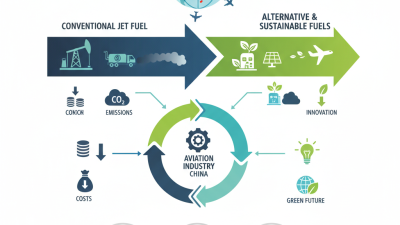
Aviation fuel supplies the energy aircraft need, with kerosene-based jet fuel powering most commercial flights. Aviation gasoline serves many smaller, piston-engine aircraft. Sustainable aviation fuel, or SAF, offers another route for turbine engines. It can be produced from used cooking oil, agricultural residues, and other eligible feedstocks. After processing, approved SAF components are typically blended with conventional jet fuel under pathway-specific limits. Compatibility matters. Airlines need fuel that meets strict requirements for freezing point, combustion performance, and safe handling.
SAF can reduce lifecycle greenhouse gas emissions, but the benefit depends on feedstock sourcing, production energy, and transport. Burning it still releases carbon dioxide. That distinction deserves attention when assessing claims about cleaner flights. Used cooking oil, for example, requires collection, traceability, and checks against contamination. Supply remains limited. Diverting residues into fuel production can also affect existing uses, so “waste” does not automatically mean impact-free. It is tempting to treat every approved pathway as equally sustainable; that assumption needs scrutiny.
Emerging alternatives include synthetic kerosene made using hydrogen and captured carbon dioxide, alongside hydrogen-powered aircraft concepts. Synthetic kerosene could use existing fuel infrastructure if it meets applicable specifications. Its climate value depends heavily on low-emission electricity and the carbon source. Hydrogen requires different storage systems, often involving bulky insulated tanks. Batteries offer possibilities for smaller aircraft on short routes, although their weight limits range and payload. These constraints make individual aircraft missions a more useful comparison than broad promises.