Top 10 Facts About Aviation Fuel You Need to Know
Aviation fuel plays a critical role in the aviation industry. Understanding its complexities is crucial for airline operators and passengers alike. Dr. Emily Carter, a leading expert in aerospace engineering, once stated, "The choice of aviation fuel can significantly affect aircraft performance and environmental impact." Her words highlight the importance of this topic.
The aviation industry relies on various types of fuel. From Jet A to biofuels, each type serves a purpose. Some fuels are more efficient but may have higher costs. Others are cheaper but can impact performance negatively. Evaluating these options is essential for optimal flight operations.
Moreover, the environmental aspect of aviation fuel can't be overlooked. The push for sustainable fuel alternatives is growing. However, transitioning away from traditional fuels presents its own set of challenges. The quest for cleaner aviation fuel requires collaboration among experts, airlines, and governments.

Understanding Aviation Fuel: Types and Their Uses
Aviation fuel is essential for flight operations. There are different types, each serving unique purposes. The most common type is Jet A, which is used in commercial aviation. It has a high flash point, making it safer for handling.
Another type is Jet A-1, which is widely used worldwide. Its lower freezing point makes it suitable for high-altitude flights. Additionally, Avgas is employed in smaller aircraft and piston-engine planes. It comes in different grades, primarily 100LL, known for its high performance.
Understanding aviation fuel also involves recognizing its environmental impact. Alternative fuels are emerging, aiming to reduce carbon emissions. However, their development is still in progress. There are concerns regarding cost and availability. Safety standards must also evolve with new fuel types. The aviation industry faces challenges in balancing efficiency and sustainability.
Top 10 Facts About Aviation Fuel
This chart illustrates the densities of various types of aviation fuel. Density is an important characteristic that affects fuel efficiency and aircraft performance. As seen, Jet A and Jet A-1 are the most commonly used fuels in commercial aviation.
The Chemistry Behind Aviation Fuel: Composition Explained
Aviation fuel is essential for flying, yet its chemistry often remains a mystery. At its core, aviation fuel is a complex mixture. This blend is primarily composed of hydrocarbons, which are derived from crude oil. These hydrocarbons include alkanes, cycloalkanes, and aromatic compounds. Each type plays a specific role in ensuring optimal performance and safety in flight.
The chemistry behind aviation fuel involves refining and treating the hydrocarbons. This process removes impurities, ensuring a high energy density. Different grades of fuel, such as Jet A and Jet A-1, have specific boiling points and compositions tailored for various aircraft types. While the goal is efficiency, sometimes the results are not perfect. For example, the environmental impact of fossil fuels raises concerns. Alternatives like biofuels are being explored, but they pose their own challenges.
Understanding the composition of aviation fuel is crucial for engineers and pilots. It is not just about getting from point A to point B. Factors like volatility and stability affect performance and safety. Continuous research in fuel chemistry aims to improve these characteristics. However, achieving the perfect balance remains a work in progress, highlighting the need for ongoing development.
Regulatory Standards: Ensuring Safety and Quality in Aviation Fuel
Aviation fuel safety is paramount in the aviation industry. Regulatory standards are in place to ensure that fuel quality remains high. These standards encompass several aspects, including fuel composition, storage conditions, and delivery methods. The American Society for Testing and Materials (ASTM) sets many of these standards, guiding the industry in fuel purity. Strict adherence to these guidelines helps prevent contamination, which can lead to engine failure.
However, not every facility meets these stringent requirements. Some airports struggle with outdated infrastructure. Storage tanks may not be adequately maintained, risking contamination of fuel. This is alarming, as even minor impurities can lead to significant safety hazards. Regular audits and inspections are critical for identifying potential issues. Companies must proactively work to enhance their systems.
Quality control extends beyond initial testing. Ongoing monitoring is vital. Fuel suppliers must implement rigorous checks at every stage. This includes examining fuel after transportation and prior to loading. Ensuring compliance is not always straightforward. Training personnel to recognize quality issues can be challenging, yet it is essential. These measures ultimately contribute to safer skies.
Environmental Impact: The Carbon Footprint of Aviation Fuel
The aviation industry significantly affects the environment. Aviation fuel, primarily derived from fossil sources, contributes heavily to greenhouse gas emissions. These emissions include carbon dioxide and other pollutants that affect air quality. Each flight releases tons of carbon, leading to a notable carbon footprint.
Airplanes fly at high altitudes, where their emissions have an even greater impact. The moisture and particles from exhaust can lead to contrail formation, contributing to cloud cover and trapping heat. It’s a complex issue; while air travel connects the world, it also accelerates climate change.
Many experts argue for immediate changes in aviation fuel. Renewable alternatives are being explored, but they are not yet widespread. Biofuels show promise, yet they often compete with food resources. This challenge raises critical questions about sustainability and food security. Airlines face a dilemma: pursue greener energy or continue with the current system. Addressing the environmental impact of aviation fuel requires collective action and innovation.
Future Trends: Innovations in Sustainable Aviation Fuels and Technology
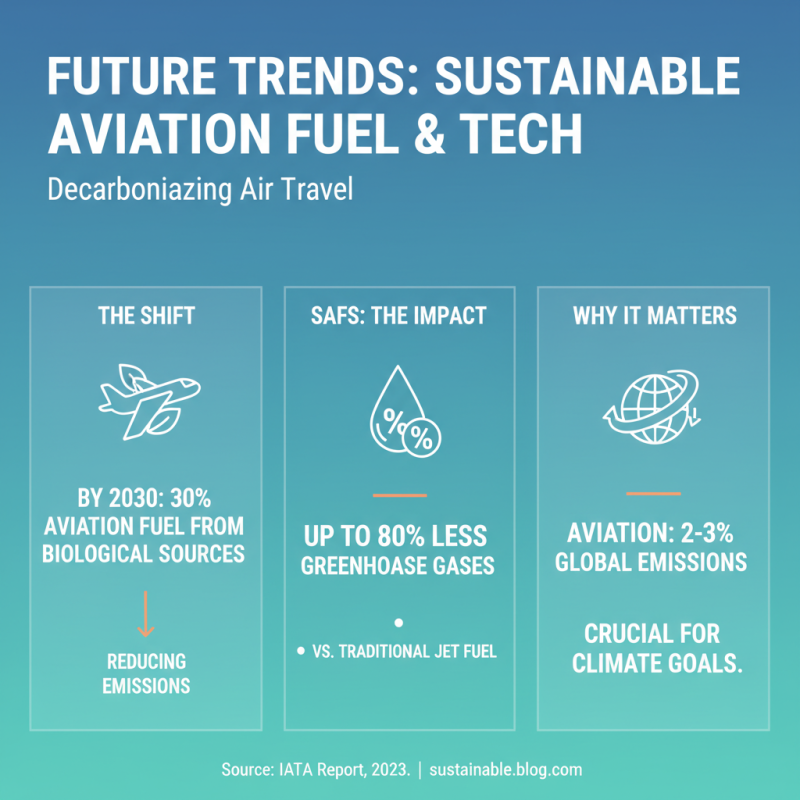
The aviation industry is undergoing significant changes with the rise of sustainable aviation fuels (SAFs). Several reports indicate that by 2030, up to 30% of aviation fuel could come from biological sources, reducing carbon emissions dramatically. According to a recent IATA report, SAFs can lower greenhouse gas emissions by up to 80% compared to traditional jet fuels. This transition is essential as aviation accounts for about 2-3% of global carbon emissions.
Innovations are also emerging in the technology behind SAF production. In recent years, companies have developed methods to convert waste materials, like used cooking oil, into high-quality aviation fuels. This process not only tackles waste management but also offers a renewable source of energy. However, challenges persist. The production costs of SAF remain high, which affects large-scale adoption. Achieving sustainability in aviation requires collaboration among stakeholders and continuous investment in R&D.
These advancements are promising, but the industry must still confront hurdles. Infrastructure development for SAF distribution is lagging. Additionally, there is uncertainty about feedstock availability. As the aviation sector moves toward sustainability, ongoing dialogue and innovation will be crucial. Balancing economic viability with environmental responsibility will shape the future of air travel.