
Top 10 General Aviation Aircraft Types for Global Buyers
Choosing an aircraft is rarely about speed alone. For global buyers, the right general aviation aircraft must match the mission, operating environment, and available support.
A two-seat trainer may suit weekend flights, while a pressurized turboprop can better serve remote business routes. Light jets offer speed, but they often demand higher maintenance budgets and longer runways. Helicopters provide access to smaller landing areas, though weather sensitivity and pilot training require careful assessment. Each type brings practical advantages and uncomfortable compromises.
This guide examines ten general aviation aircraft types used across international markets. It considers cabin utility, range, fuel burn, runway performance, avionics, maintenance access, and resale prospects. Certification standards also matter. An aircraft approved in one country may require additional validation elsewhere.
Experienced buyers inspect more than brochures. They review logbooks, engine hours, corrosion history, parts availability, and the reputation of local technicians. A clean cabin is not enough. Neither is a low purchase price.
Details decide value.
The comparison also reflects real operating conditions, including mountain airports, tropical humidity, winter icing, and limited regional infrastructure. Some conclusions may change as fuel prices, technology, and regulations evolve. That uncertainty deserves honest attention. No aircraft is perfect, and even strong recommendations can fail when the mission is poorly defined. By connecting expert analysis with practical ownership questions, this overview helps buyers create a more realistic shortlist before arranging inspections, financing, or professional pre-purchase evaluations.
Defining General Aviation Aircraft Types and Their Primary Uses
Top 10 General Aviation Aircraft Types for Global Buyers
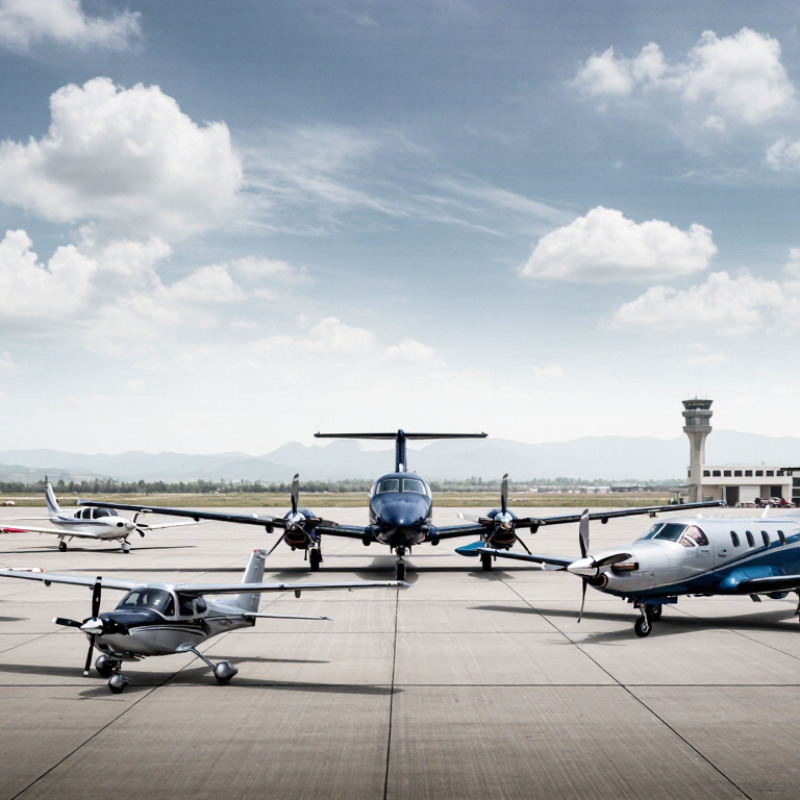
General aviation includes aircraft used outside scheduled airline service. Their roles range from pilot training to remote-area transport. A single-engine piston aircraft suits personal travel, basic training, and short grass-strip operations. Multi-engine piston aircraft offers greater capacity and useful redundancy, but maintenance can be more demanding. Turboprops perform well on regional routes, especially where runways are short or surfaces are uneven. Very light jets and light jets provide faster business travel between smaller airports. Midsize and large-cabin jets support longer journeys, higher comfort, and additional baggage. Helicopters serve city transfers, medical support, inspection work, and sites without runways. Gliders depend on rising air and are mainly used for training, sport, and competition. Amphibious aircraft can operate from runways or water, making them practical in island and lake regions.
Aircraft categories overlap. A turboprop may support family travel, cargo work, or government services. Actual usefulness depends on payload, weather, airport access, fuel availability, and local maintenance skills. Buyers should review logbooks, inspection reports, engine hours, and corrosion evidence. A clean cabin can hide expensive technical issues. I have seen buyers focus on range while underestimating runway length and seasonal heat. That mistake deserves more attention.
Tips: Define the mission before comparing aircraft. Record passenger numbers, typical distances, baggage weight, and landing surfaces. Request an independent pre-purchase inspection. Check whether qualified technicians and approved parts are available near the aircraft’s operating base. Local support often matters more than brochure performance.
Top 10 General Aviation Aircraft Types for Global Buyers - Defining General Aviation Aircraft Types and Their Primary Uses
| Aircraft Type | Typical Seats | Typical Range | Typical Cruise Speed | Runway Requirement | Primary Uses | Key Buying Considerations |
|---|---|---|---|---|---|---|
| Single-Engine Piston Aircraft | 2–6 | 900–1,700 km | 190–300 km/h | 600–1,000 m | Flight training, private travel, recreational flying, basic utility missions | Lowest acquisition and operating costs; useful for smaller airfields and moderate distances |
| Multi-Engine Piston Aircraft | 4–8 | 1,300–2,400 km | 280–420 km/h | 900–1,500 m | Advanced training, regional passenger travel, aerial survey and light cargo | Greater payload and redundancy than single-engine aircraft, with higher maintenance complexity |
| Single-Engine Turboprop Aircraft | 5–10 | 1,500–3,000 km | 450–600 km/h | 800–1,300 m | Regional business travel, island connections, medical transport and utility operations | Efficient on short and medium sectors; performs well from relatively short or unpaved runways |
| Twin-Engine Turboprop Aircraft | 6–19 | 1,800–3,500 km | 450–650 km/h | 1,000–1,600 m | Regional airline service, executive transport, cargo and special missions | Strong payload flexibility and engine redundancy; attractive for regional routes without jet infrastructure |
| Very Light Jet | 4–7 | 1,300–2,400 km | 600–720 km/h | 900–1,400 m | Owner-operated business travel, air taxi services and short executive routes | Jet speed with a comparatively small cabin; payload and baggage capacity can be limited |
| Light Jet | 6–9 | 2,000–3,500 km | 700–850 km/h | 1,100–1,700 m | Corporate travel, charter operations and fast regional connections | Good balance of speed, operating cost and airport access for short-to-medium missions |
| Midsize Jet | 7–9 | 3,500–5,500 km | 750–850 km/h | 1,300–1,900 m | International business travel, charter flights and multi-hour executive missions | More cabin comfort, baggage space and endurance than light jets; typically requires larger airports |
| Super-Midsize Jet | 8–12 | 5,000–7,000 km | 800–900 km/h | 1,500–2,200 m | Long-range corporate travel, intercontinental charter and high-comfort group travel | Combines wide-cabin comfort with substantial range; operating expenses are significantly higher |
| Large-Cabin or Heavy Jet | 10–19 | 6,500–12,000 km | 800–930 km/h | 1,800–2,700 m | Intercontinental executive travel, government transport and premium charter service | Maximum range and cabin volume among common business aircraft; needs suitable infrastructure and crew support |
| Civil Helicopter | 2–15 | 300–800 km | 180–300 km/h | Vertical takeoff and landing | Urban transfers, offshore support, emergency medical services, surveying and remote-area access | Exceptional access and operational flexibility; higher hourly costs and specialized maintenance requirements |
Note: Figures are indicative typical ranges for each aircraft category. Actual performance depends on aircraft configuration, payload, fuel reserves, altitude, temperature, runway conditions and operating regulations.
Related Posts
-
What is General Aviation and Why is it Important for the Aviation Industry
-
What is General Aviation and Why is it Important?
-

How to Choose the Best Aircraft Service for Your Needs?
-
Top 5 Best Experimental Aircraft Parts for Optimal Performance?
-
2025 Top Aviation Fuel Systems Innovations for Optimal Efficiency
-
How to Optimize Fuel Injection in Aircraft Efficiently?