How to Choose the Right 515036 Hub Assembly
Choosing the right 515036 Hub Assembly starts with verified vehicle fitment, not a familiar-looking box. A hub that seats incorrectly can affect wheel alignment, ABS signals, and bearing life. The details matter.
S&P Global Mobility reported that the average age of U.S. light vehicles reached 12.6 years in 2024. Older vehicles may need more careful replacement-part checks, but age alone does not diagnose a failed hub. The Federal Highway Administration tracks vehicle travel through its annual Highway Statistics series, offering useful context for the road loads wheel-end components face. These broad figures cannot predict the lifespan of one specific assembly. That distinction matters.
Before choosing a 515036 Hub Assembly, compare the vehicle’s year, make, model, axle position, and applicable fitment data. Check whether the unit includes an ABS sensor, and confirm connector style, flange dimensions, and mounting details against reliable catalog information. Do not rely on appearance alone. If the part number appears correct but the sensor plug or bolt pattern differs, pause and verify the application with the supplier or vehicle manufacturer. A second check is worthwhile. Catalogs can contain gaps, and a confident guess is still a guess. Industry-wide reports provide helpful context, but they do not certify a particular part’s compatibility or quality.
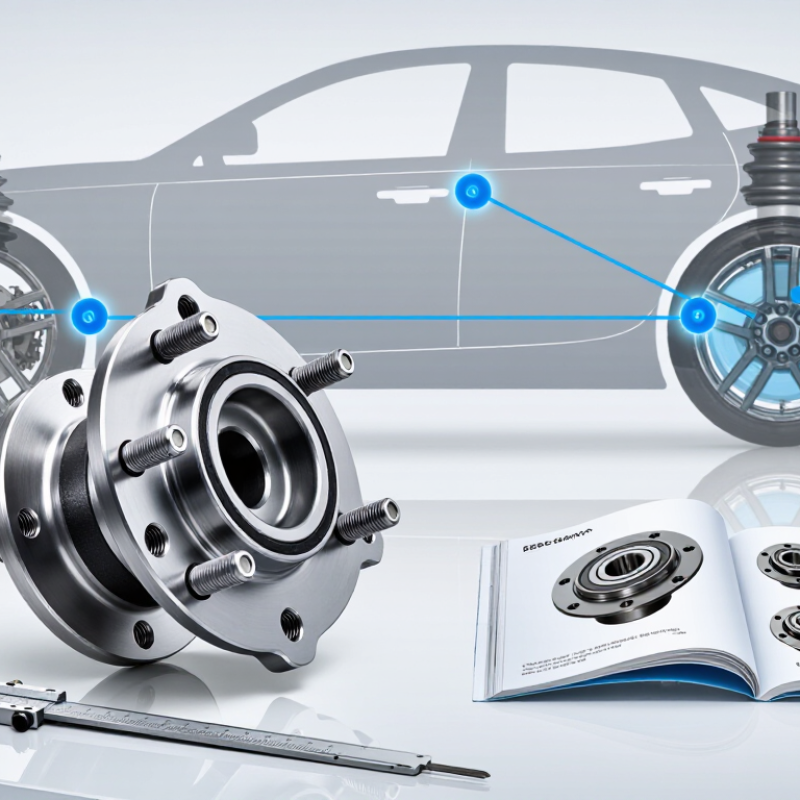
Identify Your Vehicle’s Compatibility Requirements
A 515036 hub assembly is not automatically correct for every vehicle that shares a model name. Check the exact year, make, model, trim, and drivetrain before ordering. A front-wheel-drive version and an all-wheel-drive version may use different hubs. Small detail. Big mismatch. Compare the listing with your vehicle identification number and the original equipment part number, when available. Catalog data can be incomplete, so treat a broad fitment range as a starting point, not a guarantee.
Confirm the physical details too. Check the wheel bolt pattern, axle spline count, bearing dimensions, and flange offset against reliable specifications for your vehicle. If the hub includes an anti-lock braking system sensor, verify its connector and tone-ring arrangement. A close-looking plug can still be wrong. I would not rely on a listing title alone; that shortcut is tempting, and sometimes costly. If you can inspect the old assembly, photograph its label and connector, then compare them with the replacement. A visual match helps, but it does not prove compatibility. When the catalog and vehicle details disagree, pause and confirm the application with a knowledgeable parts specialist before installation.
Verify the 515036 Hub Assembly’s Specifications
Verify the 515036 Hub Assembly against the vehicle’s exact year, model, drivetrain, and axle position. Similar-looking assemblies may differ in important ways. Check a reliable fitment catalog or service record, and confirm the part number before ordering.
Close is not exact.
Compare the assembly’s flange diameter, hub bore, bolt pattern, stud dimensions, and overall height with the vehicle’s requirements. Check whether the design includes an ABS sensor, and inspect the connector shape and wire length. These small details matter.
If you can access the old unit, compare its mounting face and electrical connection under good light. A ruler helps, but published specifications are more dependable than a quick visual match. I would not assume that a matching bolt pattern proves compatibility; that shortcut is easy to regret.
Also verify what comes in the box, such as mounting hardware or a separate sensor. Confirm installation torque using the vehicle’s service information, not a generic estimate. If specifications conflict, pause and ask a qualified parts specialist to check the application details. A little doubt here is useful. It can prevent buying a hub that fits the studs but not the vehicle’s sensor or axle setup.
Check Bearing, Seal, and Sensor Features
A 515036 hub assembly should be checked for bearing construction, seal protection, and sensor compatibility—not just matching dimensions. Confirm the application and axle position before ordering. Then compare the bearing’s load rating and design with the vehicle’s requirements.
A sealed unit helps keep water and road grit away from the rolling surfaces, but seal shape and seating still matter. Look for even, undamaged seal edges and clean mounting faces.
Easy to miss.
A seal that is nicked during installation can invite contamination and shorten service life. Check whether the assembly includes an active wheel-speed sensor, and verify its connector, cable routing, and signal type against the vehicle specification. The sensor must sit correctly near the encoder; a small gap or damaged wiring can trigger an ABS warning.
NHTSA’s 2005 evaluation of tire-pressure monitoring systems found equipped vehicles were 55% less likely to have significantly underinflated tires. That result concerns tire pressure, not hub sensors, but it shows why reliable vehicle data matters. ISO 15243 classifies bearing damage modes, including contamination and lubrication-related damage, making those useful inspection points. Do not assume every assembly with the same basic fitment has the same sensor or sealing details. I would still verify the service information twice; catalog descriptions can leave out small differences.
Compare Materials, Quality, and Warranty Coverage
For a 515036 hub assembly, compare the steel, sealing, machining, and fitment—not just the price. Confirm the application against the vehicle’s year, trim, and ABS configuration. Ask whether the bearing race is hardened, the flange is corrosion-protected, and the encoder ring is included. Small differences matter. A part can look correct yet trigger sensor faults or produce noise if its dimensions or encoder layout differ. Request written specifications when a listing is vague.
Durability deserves weight: S&P Global Mobility reported that the average age of U.S. light vehicles reached 12.6 years in 2024. That figure is fleet context, not a hub-life guarantee. Still, it supports choosing traceable material specifications and repeatable quality checks. Read the warranty line by line: coverage period, mileage cap, exclusions, and whether labor or only the part is covered. Keep the invoice and installation record. Warranty wording can disappoint. A longer term alone does not prove better manufacturing.
Confirm Fitment Before Purchasing the Assembly
Before ordering a 515036 hub assembly, match the vehicle’s year, make, model, trim, engine, and drivetrain. Check the VIN and production date, too; midyear changes can alter parts. The National Highway Traffic Safety Administration’s VIN guidance explains how a 17-character VIN identifies vehicle details. Use it to verify catalog results, not as a substitute for checking the assembly specifications.
Compare the original hub’s bolt pattern, flange dimensions, axle-spline count, ABS connector, and sensor position. A connector may look right in a product photo but still differ in pin layout. Check whether the vehicle has front- or all-wheel drive, and confirm the brake package. Small details matter. S&P Global Mobility reported that the average age of U.S. light vehicles reached 12.6 years in 2024, meaning vehicles with similar model names may span years of production and revisions. The Auto Care Association’s 2024 Factbook estimated U.S. automotive aftermarket sales at $391 billion in 2023; that scale makes accurate catalog matching important, but it does not guarantee a specific part will fit. I still double-check connector shape and mounting points. If specifications conflict, pause and confirm with a qualified parts professional before purchasing.
How to Choose the Right 515036 Hub Assembly: Confirm Fitment Before Purchasing
This checklist groups common hub-assembly fitment details. The bars count the checks listed in each category; they are not vehicle specifications. Verify your vehicle information and compare the required specifications with a reliable parts catalog before purchasing.
