Choosing a fuel flow meter is not just a matter of comparing prices. Global buyers need reliable readings, suitable materials, and support that continues after delivery. China has manufacturers serving many industrial and commercial applications, but product quality and service can differ widely between suppliers. A careful comparison matters.
This guide introduces key factors to review when assessing China-based fuel flow meter manufacturers. Consider the meter’s measurement range, accuracy, pressure and temperature limits, and compatibility with the specific fuel. A compact meter installed beside a pump may need different features from one used on a production line. Ask for clear product datasheets, calibration records, and information about testing procedures. Details matter.
Communication is part of the evaluation, too. Confirm lead times, spare-parts availability, warranty terms, and how technical questions are handled. If a supplier proposes a model, ask how its specifications match your operating conditions rather than relying on a general product description. A polished brochure is not enough. Where relevant, buyers should also verify applicable certification and documentation for their destination market directly. Requirements can vary, and a supplier’s statement may not settle every question. Even a promising quotation deserves a second look. This overview offers a practical starting point, not a guarantee of performance; real suitability depends on the installation, operating conditions, and evidence the manufacturer can provide.
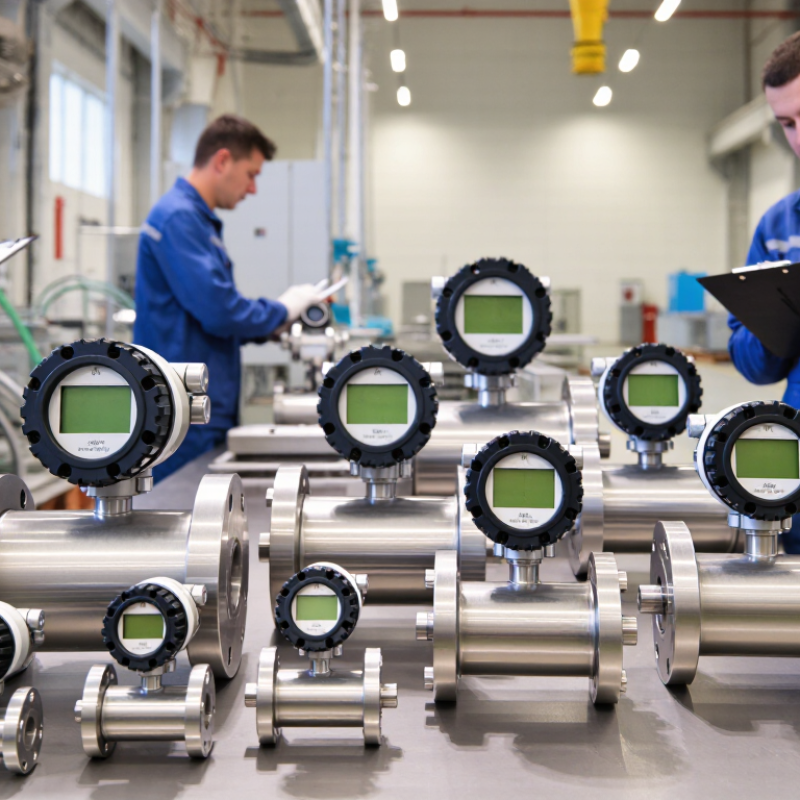
Fuel flow meters differ in what they measure and where they perform best. Positive-displacement meters capture fixed volumes, making them useful for small-batch dispensing and viscous fuels. Turbine meters suit clean, steady diesel flows, but changing viscosity can affect readings. Coriolis meters measure mass directly and can support precise fuel blending or consumption monitoring. They often cost more and need careful installation.
Ultrasonic meters measure flow from sound signals and can be installed outside suitable pipes, avoiding direct contact with fuel. They are useful on larger lines, though bubbles or poor pipe conditions may reduce accuracy. Differential-pressure meters are rugged and familiar in process plants, but their restriction creates pressure loss. No meter is perfect. Field conditions matter.
MarketsandMarkets’ 2023 Flow Meter Market report valued the broader global flow-meter market at US$9.3 billion in 2023 and projected US$12.6 billion by 2028. Those figures cover many industries, not fuel meters alone. For buyers, the practical choice depends on fuel type, required accuracy, flow range, temperature, and maintenance access. A meter that works on a test bench may behave differently beside a vibrating pump. Confirm calibration requirements and installation limits before specifying one.
The chart compares representative stated accuracy figures for common flow-meter technologies; lower values indicate higher accuracy. Coriolis and positive displacement meters are often selected where precise fuel measurement is important, while turbine, ultrasonic, and differential-pressure meters serve a range of transfer and process-monitoring duties. Actual performance depends on the meter model, fuel properties, installation, and operating conditions.
China’s fuel flow meter manufacturers typically begin with the operating conditions: fuel type, expected flow range, pressure, temperature, and installation space. These details guide choices such as the measuring principle, wetted materials, seals, and housing. A design suited to a small transfer line may not perform well in a high-flow system. Fit matters.
Production combines machining, component assembly, and inspection. Manufacturers may check rotor clearance, seal placement, and display response before calibration. During calibration, technicians compare meter readings against a reference flow over several operating points. Results can reveal errors that a simple visual inspection would miss. Small details matter.
Tips: Ask for the calibration range, stated accuracy conditions, and test records for the meter configuration you plan to buy. Confirm that connection sizes and materials match your system.
Quality depends on more than the final test. Stable assembly methods and documented checks help reduce unit-to-unit variation, though no process removes every risk. Buyers should clarify how the meter handles pulsating flow, temperature changes, and routine maintenance. A useful specification sheet is helpful, but real operating conditions can still expose gaps in the original design. Test it again.
Chinese fuel flow meter manufacturers often focus on particular measurement technologies rather than serving every application equally. Some specialize in oval gear meters, which suit steady diesel transfer and offer clear mechanical readings. Others build turbine meters for cleaner fuels and higher flow rates. Coriolis models can measure mass flow directly, but they usually cost more and require careful installation. The right choice depends on fuel type, flow range, viscosity, and the accuracy needed at the dispensing point.
Manufacturers may also differ in enclosure design, display options, and signal outputs. For a truck-mounted system, buyers might prioritize a compact body and vibration-resistant connections. A fixed tank line may need pulse output for integration with a control system. Ask for calibration records, stated accuracy, material specifications, and test conditions. Then compare them with your actual operating range, not just the headline specification. Small details matter. A meter tested with water may not perform identically with diesel, especially when temperature changes affect viscosity. Some product sheets still leave this unclear; request written confirmation before ordering. Good suppliers should explain limits plainly and provide documentation that can be checked against the intended installation.
For global buyers, a fuel flow meter’s quality is more than its stated accuracy. Ask for calibration records, repeatability results, and the measurement conditions used during testing. Check that the test fluid, flow range, temperature, and viscosity resemble your actual fuel. A bench result may not predict performance in a cold outdoor tank. Small details matter. Confirm wetted materials, enclosure protection, display readability, and output compatibility before comparing prices.
Certifications should match the application, not just decorate a sales sheet. OIML R 117-1:2019 defines accuracy classes for liquid measuring systems, including 0.3% and 0.5% classes, with maximum permissible errors specified under stated conditions. Ask suppliers to explain which class applies and whether local verification is required. A certificate can look complete yet leave important questions unanswered. Technical support deserves the same scrutiny: request response times, troubleshooting procedures, spare-parts availability, and calibration options. Ask whether support staff can review installation drawings and diagnose unstable readings from logged data. Clear answers are useful; vague promises are not. And honestly, even a strong document cannot replace a practical support test before purchase.
Choosing a fuel flow meter supplier in China takes more than comparing unit prices. Start with the operating conditions: expected flow range, fuel type, temperature, pressure, and installation space. Ask suppliers to explain how their meter performs near the low and high ends of your flow range. Request calibration records, material specifications, and clear details about output signals. Check that the proposed connections match your existing pipework. Small mismatches can create costly delays.
Compare the full procurement picture, not just the quotation. Review sample lead times, production capacity, packaging, spare parts, and technical support across time zones. Ask what inspection steps are completed before shipment and which documents accompany each batch. A sample test under realistic conditions can reveal issues that a polished specification sheet may not. Even careful checks have limits. I have seen buyers focus heavily on price, then overlook commissioning support.
Tips: Send every supplier the same request sheet. Include flow range, fluid conditions, connection size, required documents, and delivery destination. Ask for itemized pricing and written lead times. Keep answers in one comparison table. Then verify key claims with documents or a sample, rather than relying on a sales call alone.